The fastest ways to be seen at urgent care include using online check-in, visiting during off-peak hours, and bringing all required documents ready. Many Honolulu residents and visitors feel frustrated by unexpected wait times. They need care now, not hours from now.
At Honolulu Urgent Care Clinic, we understand this struggle. Our team helps patients get efficient treatment through transparent processes and modern tools.
This guide shares proven strategies to reduce your wait time. You will learn what to do before, during, and after arrival at any urgent care facility.
How to Be Seen Faster at Urgent Care
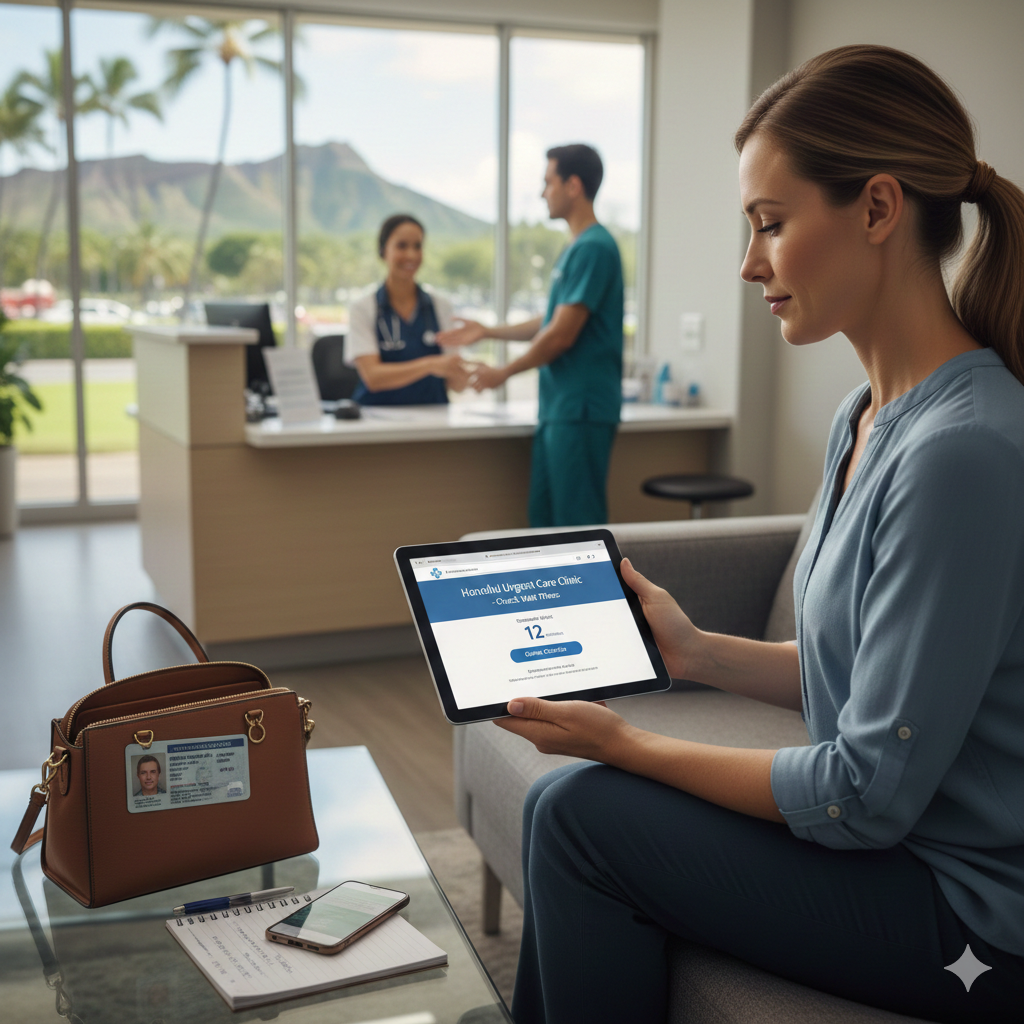
Patients can significantly cut their wait times with proper planning. The average urgent care visit takes 36 minutes from arrival to discharge. Smart preparation helps you beat that average.
Know Whether Urgent Care Is the Right Choice
Urgent care treats non-life-threatening conditions that need same-day attention. These include minor cuts, sprains, flu symptoms, and mild infections. Emergency rooms handle severe issues like chest pain or major trauma.
Choosing the wrong facility wastes valuable time. Patients who visit ERs for minor issues often wait two to three hours longer. Urgent care provides faster service for appropriate conditions.
Choose a Clinic With Shorter Reported Wait Times
Clinics with real-time wait tracking help patients make informed decisions. Many facilities now post current wait times on their websites. This transparency lets you compare options before leaving home.
Honolulu Urgent Care Clinic displays live wait estimates online. Patients can check availability and plan their visit accordingly.
Look for Locations With On-Site Labs or X-Ray
Facilities with diagnostic equipment on-site complete visits faster. Patients avoid transfers to separate imaging centers. Lab results return within minutes instead of hours.
On-site X-ray and laboratory services streamline the entire process. Your provider diagnoses and treats conditions in one convenient location.
What to Do Before You Go
Preparation at home saves significant time at the clinic. These steps help you arrive ready for efficient care.
Check Wait Times Online
Most urgent care websites display current patient volume and estimated waits. This information updates throughout the day. Checking before departure helps you choose the best time.
Some clinics experience sudden rushes after work hours. Real-time data prevents unexpected delays.
Use Online Check-In or Save-Your-Spot Tools
Online check-in reserves your place in line from anywhere. Patients complete registration forms before arriving. This process eliminates paperwork delays at the front desk.
Studies show online check-in reduces wait times by 20-30 minutes. Honolulu Urgent Care Clinic offers this convenient feature.
Gather ID, Insurance, and Medication Information
Bringing proper documentation prevents registration delays. You need a valid photo ID and insurance card. A current medication list helps providers make safe treatment decisions.
Out-of-state visitors should have their insurance member services number ready. Verification takes longer for unfamiliar plans.
Prepare a Short, Clear Summary of Your Symptoms
A focused symptom description speeds up the triage process. Note when symptoms started and their severity. Mention any treatments you have already tried.
Clear communication helps staff assess your condition quickly. They can prioritize your care appropriately.
What to Do When You Arrive at Urgent Care
Your actions at the clinic affect how quickly you receive treatment. These strategies maximize efficiency.
Visit During Off-Peak Hours When Possible
Weekday mornings typically have the shortest wait times. Evenings and weekends see the highest patient volumes. Monday mornings often bring weekend illness overflow.
Mid-morning visits between 9 AM and 11 AM usually offer faster service. Planning around peak times reduces your total visit length.
Communicate Symptoms Clearly and Concisely
Direct symptom descriptions help triage nurses assess urgency accurately. State your main concern first. Provide relevant details without unnecessary background information.
Focused communication prevents misunderstandings. Staff can route you to appropriate care faster.
Stay Close to the Clinic If You Checked In Online
Online check-in requires prompt arrival when called. Clinics may skip patients who do not respond quickly. Stay within a few minutes of the facility.
Some locations send text notifications when your turn approaches. Keep your phone accessible and volume on.
Factors That Affect How Quickly You’ll Be Seen
Understanding these variables helps set realistic expectations. Some factors remain outside patient control.
Triage Rules (Why Severe Cases Are Seen First)
Medical triage prioritizes patients by condition severity, not arrival time. Someone with breathing difficulty receives immediate attention. Minor complaints wait until critical cases stabilize.
This system ensures the sickest patients get urgent help. Your wait may extend if emergencies arrive.
High Patient Volume During Evenings/Weekends
After-work hours bring the heaviest patient traffic. Families visit when parents finish their jobs. Weekend volumes spike when primary care offices close.
Planning visits during slower periods reduces exposure to crowds. Early morning appointments often move fastest.
Additional Testing That May Delay Your Visit
Lab work and imaging add time to your appointment. Blood tests require processing time. X-rays need radiologist review for accurate diagnosis.
These delays ensure proper treatment. Rushing diagnostic steps risks missing important findings.
Insurance Verification—Especially for Out-of-State Plans
Unfamiliar insurance plans require additional verification steps. Staff must confirm coverage and benefits. Out-of-network situations need cost discussions before treatment.
Mainland visitors should call their insurance beforehand. Confirming urgent care coverage prevents billing surprises.
Factors That Can Impact Wait Times in Honolulu, HI
Island healthcare faces unique challenges. Honolulu patients encounter specific situations affecting urgent care access.
Tourist Surges Increasing Patient Volume
Visitor arrivals create unpredictable demand spikes. Peak tourism seasons strain local healthcare resources. Waikiki-area clinics experience especially high volumes.
Residents may find shorter waits at facilities away from tourist zones. Location choice matters during busy seasons.
Military and TRICARE Processing Delays
TRICARE verification requires additional administrative steps. Military families represent a significant Honolulu population. Processing their coverage takes extra time.
Active duty members should bring their military ID and TRICARE card. Having both documents ready speeds verification.
Seasonal Viral Outbreaks in Island Communities
Island populations experience concentrated illness spread. Limited geographic area accelerates transmission. Flu season brings significant patient volume increases.
Wearing masks during outbreaks protects you while waiting. Hand hygiene reduces infection risk in crowded clinics.
Limited Clinic Availability Compared to Larger Cities
Honolulu has fewer urgent care options than mainland metros. This concentration increases individual clinic volumes. Patients have fewer alternatives during busy periods.
Checking multiple clinic wait times helps identify the fastest option. Flexibility with location reduces overall wait time.
When Urgent Care Might Not Be the Fastest Option
Sometimes other care settings serve patients better. Consider these alternatives for specific situations.
Telehealth for Simple Issues
Virtual visits handle many conditions without travel time. Prescription refills, rash evaluations, and minor infections qualify. Patients receive care from home within minutes.
Telehealth eliminates waiting room time entirely. This option works well for straightforward medical questions.
Retail Clinics for Minor Illnesses
Pharmacy-based clinics treat basic conditions quickly. Cold symptoms, minor infections, and vaccinations fit this setting. Wait times often run shorter than urgent care.
These clinics have limited diagnostic capabilities. Complex conditions still require urgent care evaluation.
When the ER Is the Better Choice
Emergency rooms handle life-threatening conditions appropriately. Chest pain, severe bleeding, and stroke symptoms need ER care. Urgent care cannot manage these emergencies.
Choosing the ER for true emergencies saves lives. Choosing urgent care for minor issues saves time.
Tips for a Faster, Easier Urgent Care Visit
These final recommendations summarize the most effective strategies. Apply them consistently for best results.
Use Online Check-In Every Time
Digital registration consistently reduces wait times. Make this your standard practice. Complete forms thoroughly before arrival.
Avoid Peak Hours When Possible
Strategic timing prevents unnecessary delays. Weekday mornings offer the fastest service. Avoid Monday mornings and weekend afternoons.
Bring the Right Documents and Medication List
Proper preparation prevents administrative delays. ID, insurance card, and medication list cover most needs. Having everything ready speeds registration.
Give a Clear, Focused Symptom Description
Concise communication helps staff help you faster. State your main problem directly. Provide relevant timeline and severity details.
Get Faster Care at Honolulu Urgent Care Clinic
Reducing urgent care wait times requires smart preparation and strategic choices. Online check-in, off-peak visits, and proper documentation make significant differences. Understanding triage and local factors helps set realistic expectations.
Honolulu Urgent Care Clinic prioritizes efficient, transparent patient care. We offer online check-in, on-site diagnostics, and real-time wait time updates. Our experienced team serves residents and visitors with compassion and speed.
Visit Honolulu Urgent Care Clinic for your next non-emergency medical need. We help you get quality care without unnecessary delays.
Frequently Asked Questions
What is the fastest time to go to urgent care?
Weekday mornings between 9 AM and 11 AM typically have the shortest waits. Avoid evenings, weekends, and Monday mornings when volumes peak.
Can I check urgent care wait times before going?
Most urgent care clinics post real-time wait estimates on their websites. Honolulu Urgent Care Clinic displays current wait times online for patient convenience.
Does online check-in really reduce wait times?
Online check-in can reduce wait times by 20-30 minutes. Patients complete paperwork beforehand and reserve their place in line.
Why do some patients get seen before me at urgent care?
Medical triage prioritizes patients by condition severity. Someone with breathing problems receives care before someone with a minor rash.
What documents should I bring to urgent care?
Bring a valid photo ID, insurance card, and current medication list. Out-of-state visitors should have their insurance member services number available.
Is urgent care faster than the emergency room?
Urgent care visits average 36 minutes compared to two to four hours at emergency rooms. Urgent care handles non-life-threatening conditions more efficiently.
What conditions should go to urgent care versus the ER?
Urgent care treats minor cuts, sprains, flu, and infections. Emergency rooms handle chest pain, severe bleeding, stroke symptoms, and major trauma.