Most urgent care test results come back within minutes to a few days, depending on the type of test. Rapid diagnostics like strep, flu, and COVID tests typically deliver results in 10 to 20 minutes, while blood panels and cultures may take 24 to 72 hours.
For residents, visitors, and families in Honolulu, knowing these timelines removes guesswork and helps you plan your next steps with confidence.
This guide breaks down result speeds by test type, compares urgent care to the ER, and explains how turnaround times connect to cost and insurance coverage.
What Determines How Fast You Get Urgent Care Results?
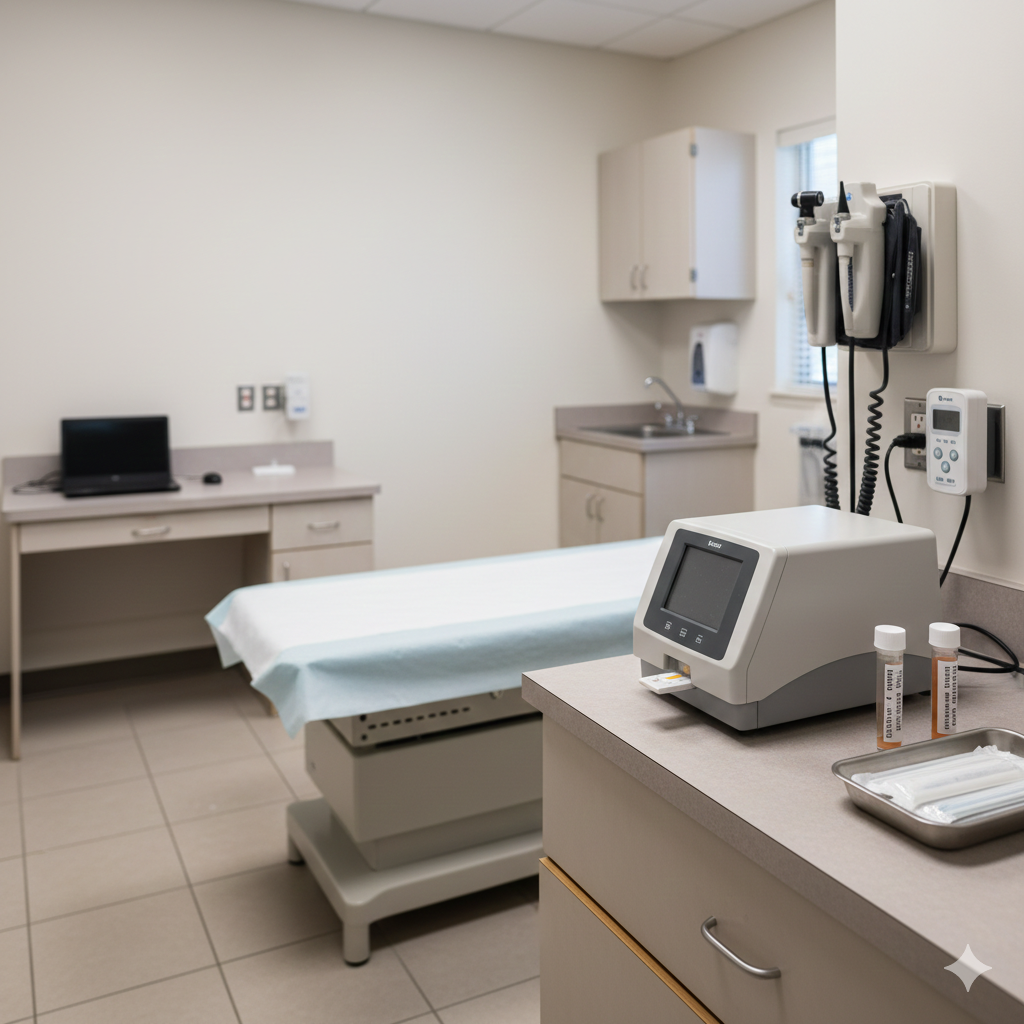
Not every urgent care visit produces results at the same speed. Several factors shape how quickly you walk out with answers or receive a follow-up notification. Understanding these variables helps set realistic expectations before you arrive at the clinic.
Type of Test or Diagnosis
The single biggest factor in result speed is the test itself. Point-of-care rapid tests, such as those for influenza, strep throat, or urinary tract infections, use small sample sizes and simplified reagents designed for immediate analysis. These return results in the exam room, usually within 15 minutes.
By contrast, a comprehensive metabolic panel or complete blood count requires more complex processing. If the clinic has an on-site analyzer, you may get preliminary results within an hour or two. Cultures, such as urine cultures or wound cultures, require incubation periods that extend turnaround to two or three days regardless of where the test is performed.
Clinic Technology and Staffing
Clinics equipped with in-house CLIA-waived testing devices and digital imaging can process a wider range of tests without sending samples to an external reference laboratory. A clinic with an on-site X-ray machine, for example, can have a radiologic technologist capture and a provider interpret images during the same visit.
Staffing levels matter too. A clinic with a dedicated lab technician processes specimens faster than one where clinical staff multitask between patient care and sample handling.
Patient Volume and Time of Visit
Walk-in urgent care clinics experience predictable volume patterns. Early mornings and late afternoons on weekdays tend to be busier, as do weekends. Higher patient volume means more specimens queued for processing and longer waits for imaging equipment.
Visiting during off-peak hours, typically mid-morning or early afternoon on weekdays, often means faster overall turnaround from check-in to results.
Urgent Care Test Results Timeline by Test Type
Below is a practical breakdown of common urgent care tests and how long each typically takes to return results. These ranges reflect standard turnaround at well-equipped clinics in Honolulu.
Rapid Diagnostic Tests (Results in Minutes)
Rapid tests are the fastest category. They use lateral flow immunoassay or similar technology to detect specific antigens or antibodies in a small sample.
Common rapid tests and their typical turnaround:
- Rapid strep test: 5 to 10 minutes
- Rapid influenza A/B test: 10 to 15 minutes
- Rapid COVID-19 antigen test: 10 to 15 minutes
- Rapid RSV test: 15 to 20 minutes
- Urine dipstick (UTI screening): 2 to 5 minutes
- Rapid mono test: 5 to 10 minutes
- Blood glucose (fingerstick): Under 1 minute
These tests are performed and interpreted during your visit. You leave the clinic knowing your result and, if needed, with a treatment plan already in hand.
Basic Lab Work (Results in Hours)
Standard laboratory panels require a blood draw and machine analysis. If the urgent care clinic operates an on-site hematology or chemistry analyzer, results can be available within one to three hours.
Common tests in this category include:
- Complete blood count (CBC): 1 to 2 hours on-site; same day if sent out
- Basic metabolic panel (BMP): 1 to 3 hours on-site
- Comprehensive metabolic panel (CMP): 2 to 4 hours on-site
- Lipid panel: 1 to 3 hours on-site
- Hemoglobin A1c: 1 to 2 hours on-site
- Thyroid panel (TSH): Often sent out; 1 to 2 business days
Not every urgent care clinic runs all of these in-house. When samples are sent to a reference lab, expect results within one to two business days. Your provider will clarify which tests are processed on-site and which are sent out.
Imaging Results: X-Rays, Ultrasounds, and More
Imaging is one of the fastest result categories at urgent care because interpretation happens in real time or near real time.
- X-ray: Images are captured in minutes. A provider can review them during your visit, with a formal radiologist reading often completed within 24 hours.
- Ultrasound: If available on-site, images are captured in 15 to 30 minutes. Preliminary findings are discussed during the visit.
- EKG (electrocardiogram): Results are available immediately, with the tracing interpreted by your provider on the spot.
For fractures, sprains, chest complaints, and abdominal concerns, on-site imaging eliminates the need for a separate radiology appointment and delivers actionable information within the same visit.
Send-Out Lab Tests (Results in Days)
Some tests require specialized equipment, reagents, or incubation periods that only a reference laboratory can provide. These are collected at the urgent care clinic but processed off-site.
- Urine culture with sensitivity: 2 to 3 days
- Wound culture: 2 to 3 days
- Throat culture (confirmatory after rapid strep): 1 to 2 days
- STI panels (chlamydia, gonorrhea, syphilis, HIV): 1 to 5 days depending on methodology
- Comprehensive drug screening: 1 to 3 business days
- Pathology specimens: 3 to 7 business days
Your urgent care provider will typically start empiric treatment based on clinical findings and rapid test results while awaiting confirmatory send-out results. You will be contacted with final results and any necessary treatment adjustments.
How Honolulu Urgent Care Clinics Deliver Faster Results
Urgent care in Honolulu has evolved significantly. Modern clinics invest in technology and workflows specifically designed to reduce the gap between sample collection and result delivery.
On-Site Lab and Imaging Equipment
Clinics that maintain CLIA-certified on-site laboratories can run the most commonly ordered tests without relying on courier services or external lab schedules. This is especially valuable in Honolulu, where geographic isolation can add transit time for specimens shipped to mainland reference laboratories.
On-site digital X-ray systems produce images in seconds. Combined with a provider trained in radiographic interpretation, this means a patient with a suspected wrist fracture can have imaging captured, reviewed, and a treatment plan initiated within a single 30-minute visit.
Digital Results and Patient Communication
Many Honolulu urgent care clinics now use electronic health record (EHR) patient portals that push lab results directly to your phone or email as soon as they are finalized. This eliminates the delay of waiting for a phone call during business hours.
Some clinics also offer secure messaging, allowing you to ask follow-up questions about your results without scheduling another appointment. For visitors staying in Honolulu temporarily, digital access means you can review results from anywhere, even after returning home.
Urgent Care Results vs. Emergency Room Results: Speed Comparison
One of the most common questions patients in Honolulu ask is whether the emergency room delivers faster test results than urgent care. The answer depends on what you are being tested for and how busy the facility is.
Average Wait Times and Turnaround
The distinction is important. Emergency rooms have access to the same rapid tests and often have larger on-site laboratories. However, ER wait times are significantly longer because patients are triaged by severity. A non-life-threatening condition, exactly the type of case appropriate for urgent care, may wait hours before a provider even orders the test.
According to data from the Centers for Disease Control and Prevention, the average emergency department visit in the United States lasts approximately 2 hours and 40 minutes from arrival to discharge. For patients with lower-acuity complaints, that number can stretch to four hours or more.
At an urgent care clinic, total visit time for a condition requiring a rapid test and basic evaluation typically ranges from 30 to 60 minutes. For visits requiring blood work or imaging, expect 60 to 90 minutes.
| Factor | Urgent Care | Emergency Room |
| Average total visit time | 30 to 90 minutes | 2 to 4+ hours |
| Rapid test turnaround | 5 to 20 minutes | 5 to 20 minutes (after provider sees you) |
| Basic lab turnaround | 1 to 3 hours | 1 to 3 hours (after provider sees you) |
| X-ray turnaround | During visit | During visit (after triage) |
| Wait before being seen | 15 to 30 minutes | 30 minutes to 3+ hours |
| Average cost (self-pay) | $150 to $350 | $800 to $3,000+ |
The test processing time is often similar. The difference is how long you wait before the test is ordered.
When Faster ER Results Are Worth the Cost
Emergency rooms are the right choice when symptoms suggest a life-threatening condition: chest pain with shortness of breath, signs of stroke, severe allergic reactions, major trauma, or uncontrolled bleeding. In these situations, the ER’s ability to run stat labs, advanced imaging like CT scans and MRIs, and provide immediate intervention justifies the higher cost and longer overall visit.
For non-emergency conditions like sore throats, minor injuries, UTI symptoms, rashes, ear infections, and mild respiratory illness, urgent care delivers equivalent diagnostic accuracy with dramatically shorter wait times and lower out-of-pocket costs.
What to Do While Waiting for Urgent Care Results
Some results take time. Knowing how to use that waiting period productively reduces anxiety and ensures you get the most from your visit.
Questions to Ask Your Provider
Before leaving the clinic or while waiting for results, consider asking:
- What test was ordered, and what is it looking for?
- How long should I expect to wait for results?
- Will I be contacted by phone, portal, or both?
- Should I start any treatment now, or wait for confirmation?
- What symptoms should prompt me to return or go to the ER before results arrive?
- If the test is negative, what is the next step?
These questions help you leave the visit with a clear action plan regardless of how long the results take.
How to Access Your Results After Your Visit
Most urgent care clinics provide results through one or more of these channels:
Patient portal: Results are posted as soon as they are finalized. You receive an email or text notification. This is the fastest method for send-out labs.
Phone call: A nurse or provider calls to discuss results that require follow-up action, such as a positive culture or abnormal blood work.
Secure message: Some clinics allow you to message your care team directly through the portal for clarification.
In-person follow-up: Rarely needed for urgent care results, but may be recommended if findings require a physical re-examination or procedure.
If you are a visitor to Honolulu, confirm before your visit that the clinic can deliver results electronically. This ensures you receive your information even after you leave the island.
How Urgent Care Result Speed Affects Your Cost
The speed of your results is not just a convenience factor. It directly connects to what you pay for your visit.
Rapid Tests vs. Send-Out Labs and Pricing
Rapid point-of-care tests are generally less expensive than send-out laboratory panels. A rapid strep test, for example, may cost $25 to $50 as part of your visit, while a full throat culture sent to a reference lab could add $50 to $100 or more.
Similarly, a basic metabolic panel processed on-site may be bundled into your visit fee, while a comprehensive panel sent to an external lab generates a separate bill from that laboratory.
Understanding which tests are rapid and which are send-out helps you anticipate your total cost. Ask your provider at the time of the visit which tests will be run in-house and which will be sent out, so you can plan accordingly.
Insurance Coverage and Self-Pay for Lab Work in Honolulu
Most health insurance plans, including HMSA, Kaiser Permanente Hawaii, UnitedHealthcare, and plans purchased through the Affordable Care Act marketplace, cover diagnostic lab work ordered at urgent care. Your out-of-pocket cost depends on your plan’s copay, coinsurance, and whether you have met your deductible.
For self-pay patients, including visitors without local insurance coverage, many Honolulu urgent care clinics offer transparent pricing for common tests. Expect to pay:
- Rapid tests (strep, flu, COVID): $20 to $50 per test
- Basic blood panels: $50 to $150
- X-ray (single view): $75 to $200
- Urine culture (send-out): $40 to $100
These are estimates. Actual pricing varies by clinic. The key is to ask about costs before testing begins. A transparent clinic will provide a clear estimate so you can make an informed decision without financial surprises.
Conclusion
Urgent care results range from minutes for rapid tests to a few days for send-out cultures and specialized panels. Knowing these timelines helps you choose the right care setting, ask the right questions, and avoid unnecessary ER visits.
For Honolulu residents and visitors, selecting an urgent care clinic with on-site labs and digital result delivery means faster answers and lower costs. Transparent pricing and clear communication turn an uncertain medical moment into a manageable one.
We invite you to visit Honolulu Urgent Care Clinic for efficient, honest care with results you can count on, delivered as quickly as possible.
Frequently Asked Questions
How long does it take to get blood test results from urgent care?
Basic blood panels like a CBC or metabolic panel take one to three hours if processed on-site. If sent to an outside lab, expect results within one to two business days. Your provider will tell you which method applies to your specific test.
Can I get same-day lab results at an urgent care clinic in Honolulu?
Yes. Clinics with on-site analyzers can return results for common blood tests, urinalysis, and rapid diagnostics the same day. Send-out tests like cultures or specialized panels require additional processing time at a reference laboratory.
Are rapid strep and flu test results accurate?
Rapid antigen tests for strep and influenza have high specificity, meaning a positive result is very reliable. Sensitivity varies, so a negative rapid test may be followed by a confirmatory culture. Your provider will explain whether additional testing is needed based on your symptoms.
How do I receive my urgent care test results?
Most clinics deliver results through a secure patient portal, phone call, or secure message. Rapid test results are shared during your visit. Send-out results are typically posted to the portal or communicated by phone within one to five business days.
Do urgent care clinics in Honolulu have on-site X-ray machines?
Many do. On-site digital X-ray allows your provider to capture and review images during the same visit. This is standard for evaluating fractures, sprains, chest symptoms, and certain abdominal complaints. Call ahead to confirm imaging availability if your concern requires it.
Is it faster to get test results at urgent care or the emergency room?
The actual lab processing time is similar. The difference is wait time before being seen. Urgent care patients are typically evaluated within 15 to 30 minutes, while ER patients with non-emergency conditions may wait one to three hours before a provider orders any tests.
Does insurance cover lab tests done at urgent care?
Most major insurance plans cover medically necessary lab work ordered during an urgent care visit. Coverage depends on your specific plan, copay structure, and deductible status. Self-pay patients can request upfront pricing before testing to avoid unexpected charges.