Knowing when to go to urgent care versus the emergency room depends on symptom severity—urgent care treats non-life-threatening conditions like minor injuries, infections, and flu symptoms, while the ER handles emergencies like chest pain, stroke signs, or severe trauma. Many Honolulu residents and visitors face this confusing decision during unexpected health issues.
Honolulu Urgent Care Clinic helps patients navigate these choices with confidence. Our experienced team provides fast, affordable care for conditions that need attention but aren’t emergencies.
This guide explains exactly when each facility is appropriate. You’ll learn about costs, wait times, and symptoms to watch for in Honolulu.
Understanding When to Visit Urgent Care or the Emergency Room in Honolulu, HI
Choosing the right care facility saves time, money, and stress. Honolulu offers both urgent care centers and hospital emergency departments. The key difference lies in medical severity and treatment capabilities.
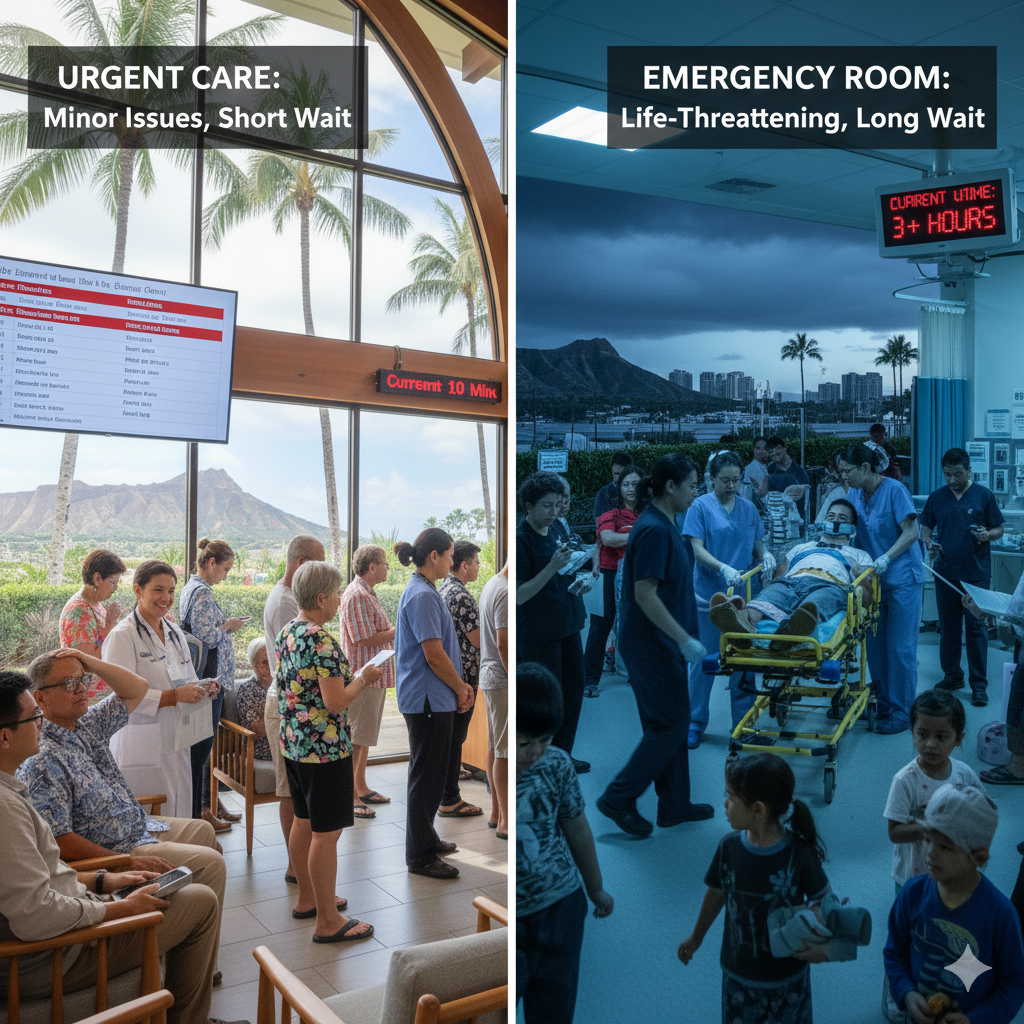
Key Differences Between Urgent and Emergency Care
Urgent care centers treat non-life-threatening conditions that need same-day attention. These facilities handle illnesses and injuries that can’t wait for a regular doctor visit. Emergency rooms provide advanced life-saving interventions around the clock.
ERs have specialized equipment for critical situations. They employ trauma surgeons, cardiologists, and other specialists. Urgent care clinics focus on common medical problems with faster service.
When to Go to Urgent Care
Urgent care is ideal for minor illnesses and injuries requiring prompt treatment. Patients should visit when symptoms are uncomfortable but not dangerous. Most conditions resolve quickly with proper medical attention.
Common Illnesses and Injuries Treated at Urgent Care
Urgent care clinics handle sprains, strains, and minor fractures effectively. They treat respiratory infections, flu symptoms, and ear infections daily. Skin conditions, minor burns, and small cuts receive expert care.
Urinary tract infections respond well to urgent care treatment. Allergic reactions without breathing problems are appropriate cases. These facilities also provide vaccinations and basic lab testing.
Benefits of Choosing Urgent Care Over the ER
Urgent care visits cost significantly less than emergency room trips. The average urgent care visit costs between $100-$200, while ER visits often exceed $1,000. Wait times at urgent care typically range from 15-45 minutes.
Patients receive personalized attention in a calmer environment. Insurance copays are usually lower for urgent care visits. Self-pay patients benefit from transparent, predictable pricing.
When to Go to the Emergency Room
Emergency rooms are essential for life-threatening conditions requiring immediate intervention. These situations involve vital organ function or severe trauma. Time-sensitive conditions like heart attacks need ER resources.
Life-Threatening Conditions and Severe Injuries
Chest pain with shortness of breath requires emergency evaluation. Stroke symptoms like facial drooping demand immediate ER care. Severe bleeding that won’t stop needs emergency intervention.
Major trauma from accidents belongs in the emergency department. Difficulty breathing or loss of consciousness are ER situations. Severe allergic reactions with throat swelling need emergency treatment.
Signs of a Physical Emergency
Physical emergencies include sudden severe pain, high fever with confusion, or uncontrolled bleeding. Broken bones with visible deformity require ER imaging and treatment. Head injuries with vomiting or confusion need emergency assessment.
Severe abdominal pain could indicate appendicitis or other serious conditions. Burns covering large body areas require specialized emergency care.
Recognizing Mental Health Emergencies
Mental health crises sometimes require emergency intervention. Thoughts of self-harm or suicide need immediate professional help. Severe psychotic episodes may require emergency psychiatric evaluation.
Not Sure Where to Go? Call 911 or Visit the ER
When uncertain about symptom severity, calling 911 provides professional guidance. Dispatchers help determine the appropriate level of care. They can send emergency responders if needed.
Comparing Cost and Wait Times in Honolulu, HI
Healthcare costs vary dramatically between facility types. Understanding these differences helps patients make informed financial decisions.
Average Urgent Care Visit Costs in Honolulu
Urgent care visits in Honolulu typically cost $100-$250 for most conditions. Additional fees apply for X-rays, lab tests, or procedures. Many clinics offer transparent pricing before treatment begins.
Insurance copays for urgent care average $25-$75. Self-pay patients often receive discounted rates. Honolulu Urgent Care Clinic provides clear cost estimates upfront.
Typical Emergency Room Charges and Billing Information
Emergency room visits average $1,200-$2,500 for non-critical conditions. Complex cases can exceed $10,000 with specialist consultations and advanced imaging. ER bills often arrive weeks after treatment.
Facility fees, physician charges, and tests create multiple bills. Insurance deductibles apply before coverage begins. Uninsured patients face the highest financial burden.
Cost Breakdown Between Urgent Care and ER Visits
The cost difference between facilities is substantial. A simple laceration repair costs around $150 at urgent care. The same treatment in an ER may exceed $800.
Flu treatment at urgent care runs approximately $100-$150. Emergency room flu visits often cost $500-$1,000. These savings add up for families and frequent travelers.
Wait Time Differences and What to Expect
Urgent care wait times average 15-30 minutes in Honolulu. Emergency rooms prioritize patients by severity, not arrival time. Non-critical ER patients may wait 2-4 hours or longer.
Access to Local Urgent Care Centers and Hospitals in Honolulu
Honolulu offers multiple healthcare options across Oʻahu. Location and hours affect care decisions significantly.
Availability of 24/7 Urgent Care Clinics
Some Honolulu urgent care centers offer extended evening hours. Weekend availability helps patients avoid Monday ER visits. Checking clinic hours before arriving saves time.
Major Hospitals and Emergency Departments on Oʻahu
The Queen’s Medical Center provides Level I trauma services. Straub Medical Center and Kapiolani Medical Center serve different populations. Kaiser Permanente operates facilities for members throughout Honolulu.
How Proximity and Travel Time Affect Care Decisions
True emergencies require the nearest emergency department regardless of distance. Non-emergencies allow time to choose convenient urgent care locations. Traffic conditions in Honolulu affect travel time significantly.
Making the Right Choice for Your Health Situation
Proper assessment prevents unnecessary ER visits and ensures appropriate care.
How to Assess Symptoms and Severity Before Deciding
Evaluate whether symptoms threaten life or limb function. Stable conditions with manageable pain suit urgent care well. Rapidly worsening symptoms may indicate emergency situations.
Understanding Insurance Coverage and In-Network Facilities
Verify your insurance network before seeking care. In-network urgent care visits cost less than out-of-network ERs. Honolulu Urgent Care Clinic accepts most major insurance plans.
Why Choosing the Right Facility Matters for Honolulu’s Healthcare System
Reducing Emergency Room Overcrowding and Wait Times
Appropriate urgent care use reduces ER overcrowding significantly. Studies show 13-27% of ER visits could be handled at urgent care. This benefits everyone needing emergency services.
Improving Patient Outcomes with Proper Care Choices
Patients receive faster treatment at appropriate facilities. Urgent care specialists focus entirely on non-emergency conditions. Better outcomes result from matching care level to medical needs.
Conclusion
Making the right choice between urgent care and the emergency room protects your health and wallet. Non-life-threatening conditions receive excellent care at urgent care facilities. Emergency rooms remain essential for true medical emergencies.
Honolulu Urgent Care Clinic provides trusted, transparent healthcare for residents and visitors. Our experienced team treats common illnesses and injuries efficiently. We help patients avoid unnecessary ER costs and long wait times.
Visit Honolulu Urgent Care Clinic for your non-emergency medical needs today. Our team offers clear pricing, short wait times, and compassionate care. Contact us to learn more about our services.
Frequently Asked Questions
What conditions should I go to urgent care for?
Urgent care treats minor injuries, infections, flu symptoms, and sprains. These conditions need attention but aren’t life-threatening. Most patients receive treatment within an hour.
How much does an urgent care visit cost without insurance in Honolulu?
Self-pay urgent care visits typically cost $100-$250 in Honolulu. Additional fees apply for X-rays or lab tests. Many clinics offer transparent pricing before treatment.
Can urgent care treat broken bones?
Urgent care can treat minor fractures and provide splinting. Severe breaks with deformity need emergency room care. X-ray capabilities help diagnose bone injuries accurately.
What are the signs I should go to the ER instead of urgent care?
Chest pain, stroke symptoms, severe bleeding, and difficulty breathing require the ER. Loss of consciousness and major trauma need emergency care. When unsure, call 911 for guidance.
How long is the wait at urgent care vs the emergency room?
Urgent care wait times average 15-30 minutes. Emergency room waits range from 1-4 hours for non-critical cases. ER patients are seen by severity, not arrival order.
Does insurance cover urgent care visits?
Most insurance plans cover urgent care with lower copays than ER visits. Verify your plan’s in-network facilities before visiting. Self-pay options exist for uninsured patients.
Is urgent care open on weekends in Honolulu?
Many Honolulu urgent care centers offer weekend hours. Check specific clinic schedules before visiting. Weekend availability helps patients avoid unnecessary ER trips.